
No Soil, No Pests: Hydroponics As A Natural Humidifier For People With Allergies Or Sensitivities.

For people with allergic rhinitis, asthma or sensitive skin, the home should be a safe haven—yet it sometimes becomes a place where allergens accumulate.
Airborne dust mites, proliferating mould, pungent pesticides… every breath can feel like a gamble.
In recent years, a soil-free growing method hydroponics has quietly emerged as a new favourite for home health among sensitive populations. It is not only aesthetically pleasing but also serves as a natural "air purifier" and "humidifier."
I. Farewell to Soil: Cutting Off Allergen Sources at the Root

Although traditional soil-grown plants are visually appealing, soil is a potential "minefield." Soil is a primary breeding ground for dust mites and mould spores. During routine watering and repotting, microscopic allergenic particles readily become airborne and directly irritate the respiratory tract.
One key advantage of hydroponics is that it does not require soil.
Plant roots grow in a water-based nutrient solution, eliminating dust and mould at the source, substantially improving indoor air cleanliness, and making it an ideal choice for allergy sufferers.
II. Avoiding Pests: Reducing the Need for Pesticides
Indoor soil-grown plants frequently attract pests such as fungus gnats and spider mites. The excreta, shed skins, and even carcasses of these pests are common inhalant allergens. The pesticides used to control them introduce chemical components that are particularly detrimental to asthma patients.

The hydroponic environment greatly reduces the probability of pest infestation.
Without soil serving as a medium for insect eggs to overwinter and reproduce, and provided that pest-carrying plants are not introduced initially, the interior of a hydroponic container is virtually pest-free. This means no pesticide spraying is required, making it safer for sensitive individuals.
III. Natural Humidification: Gently Alleviating Respiratory Dryness
During autumn and winter, or with prolonged exposure to air-conditioned rooms, when air humidity frequently falls below 40%, many sensitive individuals experience nasal dryness, itchy throat and dry, tight-feeling skin. The defensive function of the nasal mucosa and respiratory cilia declines significantly, making it easier for allergens and viruses to invade.

Hydroponic plants are excellent "natural humidifiers":
Through leaf transpiration and natural evaporation from the water surface, hydroponic plants gently humidify the air. With proper maintenance, three to five hydroponic plants can raise the humidity of a small room by 5%–10%, maintaining the environment within a comfortable range of 40%–60%, effectively alleviating nasal dryness and dry cough symptoms.
IV. More Than Greenery: Fresh Greens You Can Eat: Hydroponic Edible Leafy Vegetables
Hydroponic plants are not only attractive but also edible. Lettuce, basil, and Chinese lettuce grow quickly without soil residue or insect eggs, making them easy to clean. There is also less concern about heavy metals or parasites from soil, making them especially suitable for elderly people and children with sensitive digestive systems.
Vegetable Name | Growth Characteristics | Serving Suggestions |
Amaranth | Both red amaranth and green amaranth are suitable; develops an extensive root system after hydroponic cultivation, with tender leaves | Crisp texture |
Arugula | Extremely rapid growth, with a distinctive sesame-like aroma | Suitable for salads |
Chicken-feather greens (baby pak choi) | The seedling form of pak choi; true leaves emerge after 7–10 days of hydroponic cultivation | A common vegetable in home-style stir-fries |
Basil | Leaves have a fresh aroma. When plant height is maintained below 20 cm through continuous topping, tender leaves can be harvested continuously, allowing for long-term cultivation | Consumed fresh or used as a garnish |
Lettuce | Well-developed root system, rapid growth, prefers cool environments | Suitable for raw consumption or blanching in hot pot |
Leaf lettuce (youmaicai) | Short growth cycle, relatively strong cold tolerance | Crisp and tender texture; suitable for light stir-frying |
V. Intelligent Upgrade: Bringing the "Smart Ecosystem" into the Living Room
Although hydroponic growing avoids soil, it still requires regular care: How should the nutrient solution concentration be prepared? What if there is insufficient light on cloudy or rainy days? What if you are away on a business trip for a week and no one changes the water?
The SINGRASS® Indoor Smart Ecosystem ISES™ provides a thoughtful solution!

-Truly soilless cultivation: Supports mixed cultivation of approximately 45 varieties of edible leafy vegetables and herbs, with zero pesticides throughout the entire process, eliminating soil-borne mould and pests. Particularly suitable for households with people who have allergies.
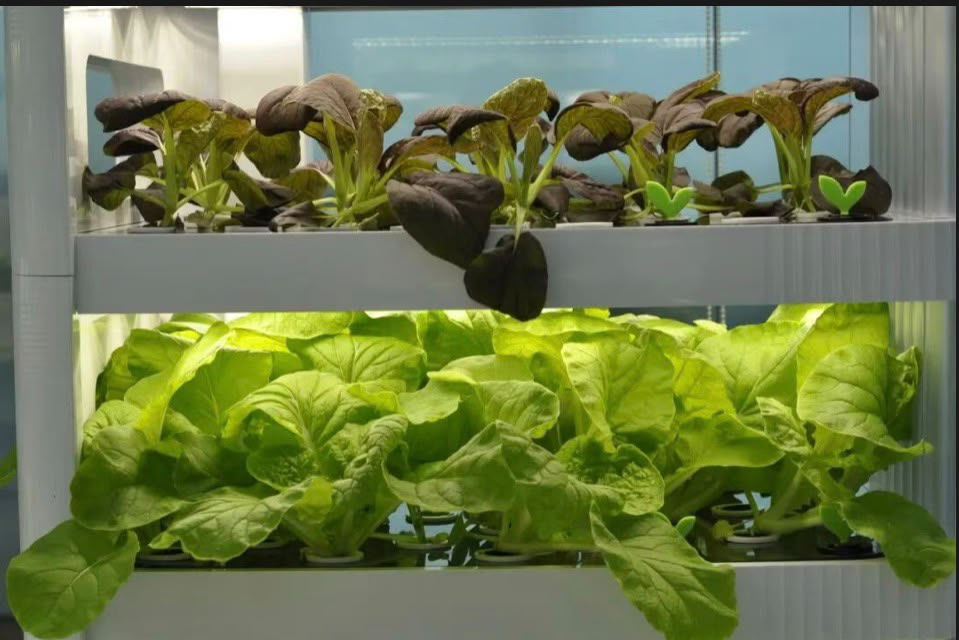
- Automatic recirculating system: An intelligent water pump circulates the nutrient solution on a timed schedule, effectively inhibiting algal growth and maintaining clear water quality.
- Full-spectrum simulated sunlight: Built-in LED full-spectrum light strips simulate natural daylight, ensuring plant photosynthesis even on cloudy or rainy days or in north-facing rooms.

- Ecological microclimate: The plant community gently humidifies through transpiration while absorbing indoor CO₂ and degrading formaldehyde and TVOCs—achieving multiple benefits simultaneously.
- Harvest-and-eat: Fresh from your indoor garden to your plate, eliminating the need for cold-chain transportation and enjoying your greens soon after harvest.

Less pollen and dust, less chemical irritation, more moisture and greenery. Hydroponics, in the cleanest possible way, builds an invisible respiratory defense line for sensitive populations. Bring the SINGRASS® Indoor Smart Ecosystem into your living room and let every deep breath be taken with peace of mind. Let every tender, fresh leaf serve as a guarantee of healing and health.


Comments