
SINGRASS® Indoor intelligent ecosystem (ISES™): Six values of indoor plant community cultivation, redefining the ecological benchmark for premium properties


Prologue
Urbanization is an irreversible trend of human civilization. Today, over 80% of people spend most of their days inside enclosed concrete buildings, making Sick Building Syndrome (SBS) a common challenge for cities worldwide.
Issues include dizziness and fatigue caused by excessive CO₂ concentration, persistent exposure to formaldehyde and TVOC, hidden pollution risks of traditional green plants, and lack of quantifiable implementation paths for green transformation... How to strike a balance between nosocomial infection prevention and humanistic care? How to maintain stable indoor ecology and customer experience during store renovations? How can office buildings with permanently closed windows achieve their ESG goals? These are the core dilemmas facing premium property managers in China.
The 2026 China International Property Management Industry Expo is just 25 days away.

SINGRASS®, a Singapore-based tech-driven ecological enterprise, will unveil its Indoor Intelligent Ecosystem (ISES™) at the expo. Backed by full authoritative certification from Germany's TÜV SÜD, the solution adopts an innovative model of building indoor plant communities with 45 selected mature leafy vegetables varieties, delivering one-stop ESG solutions for urban spaces and redefining the ecological service standard for premium properties.
Featuring 5 layers with 150 planting holes, built-in full-spectrum soft supplementary light strips, and an intelligent fully automatic irrigation system, the SINGRASS® ISES™ delivers six core values: ecological landscape, ecological function, ecological farm, emotional value, carbon sink value, and economic value.

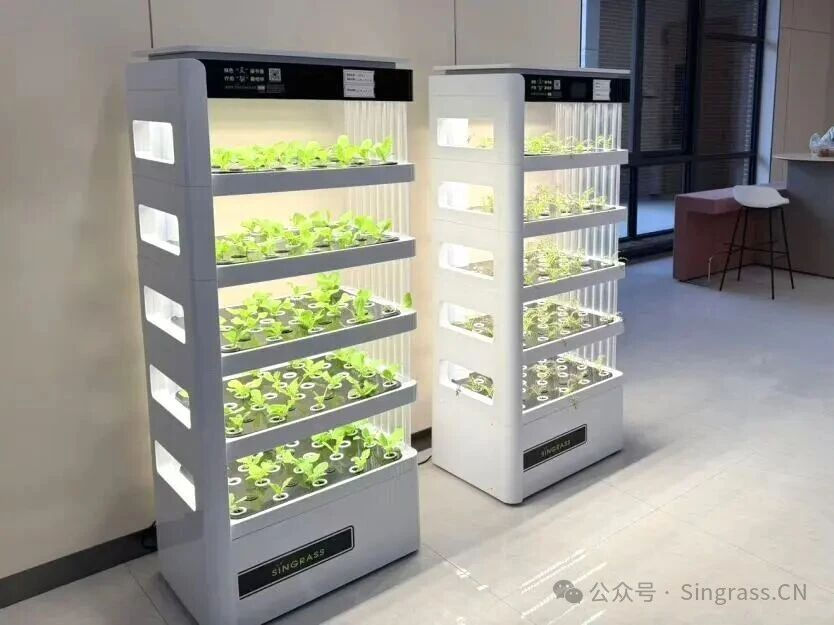

Verified by TÜV SÜD, the indoor intelligent ecosystem delivers remarkable 24-hour air purification performance:
Formaldehyde

The SINGRASS® ISES™ with 3-week-old leafy vegetable seedlings was placed in a sealed chamber saturated with formaldehyde to test its 24-hour formaldehyde degradation efficiency. Results show that the system rapidly reduces formaldehyde concentration from 0.87 ppm to below 0.1 ppm within 2 hours, demonstrating outstanding efficacy.
CO₂

The SINGRASS® ISES™ rapidly reduces carbon dioxide concentration from 2200 ppm to below 800 ppm within 4 hours, with remarkable results.
TVOC
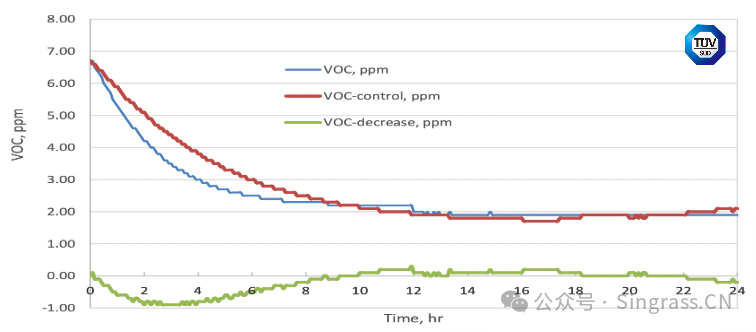
The SINGRASS® ISES™ rapidly reduces total volatile organic compound (TVOC) concentration from 6.7 ppm to below 2ppm within 12 hours, delivering significant purification effects.

While domestic property sectors have different priorities for indoor ecology, they all share common challenges: deteriorating air quality in enclosed spaces, lack of tangible measures for green transformation, and homogenized services. Rooted in ecology and driven by intelligent innovation, SINGRASS customizes targeted solutions for core pain points in different scenarios, translating laboratory data into practical space optimization solutions for real-world settings.
SINGRASS × Hospital Property: Solving Nosocomial Infection Control and Ecological Challenges
Nosocomial infection prevention is the top priority for logistics and property management. Most medical institutions face the problem of high-density, enclosed spaces in wards and waiting halls, where peak CO₂ concentration often exceeds 1800 ppm (international authorities recommend 900 ppm as the ideal long-term indoor CO₂ concentration for human exposure), causing dizziness, fatigue and chest discomfort among medical staff and patients. Conventional soil-planted green plants are prone to breeding mold and mosquito spores, becoming invisible sources of nosocomial infection.
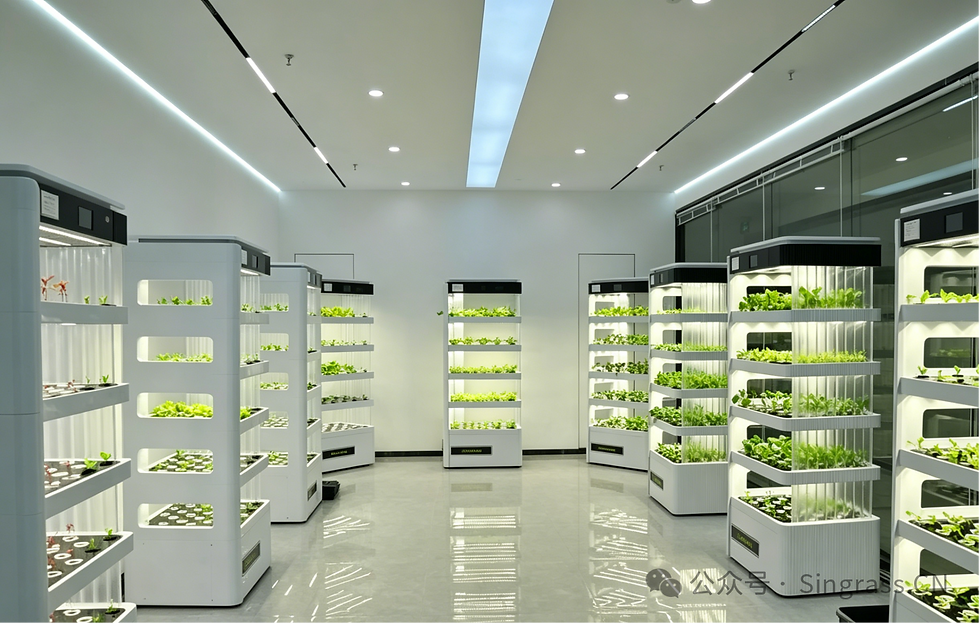
Adopting a soilless hydroponic structure, the SINGRASS® ISES™ eliminates the risk of pathogenic bacteria growth at the source. The community of leafy vegetables and aromatic plants stably maintains indoor CO₂ concentration below 800 ppm in enclosed spaces, and efficiently decomposes formaldehyde, TVOC and other pollutants emitted by renovation and medical agents, supporting hospitals in achieving green ratings and ESG target implementation.
SINGRASS × Shopping Mall Property: A New Type of Ecological Display That Absorbs Formaldehyde
Large shopping malls see dense customer flow, and frequent store renovations inevitably cause formaldehyde pollution. Traditional soft decoration displays are costly and require frequent replacement, leading to serious homogenization across malls and a lack of distinctive scenarios to attract foot traffic.

The SINGRASS® ISES™ can replace disposable commercial display decorations, suitable for building indoor plant communities in atriums and corridors. Vibrant leafy vegetables not only improve air quality but also create a unique natural landscape. Meanwhile, dedicated parent-child picking experience zones can enrich customer experience, delivering multiple benefits at once.
SINGRASS × Office Building Property: Enabling Corporate ESG Implementation
Enclosed office buildings often suffer from insufficient fresh air supply, especially on high floors where windows remain closed year-round. High CO₂ concentration significantly reduces employees’ cognitive performance. Many companies currently use traditional green plants (such as pothos and spider plants) to improve office environments, which is in fact a common misconception.
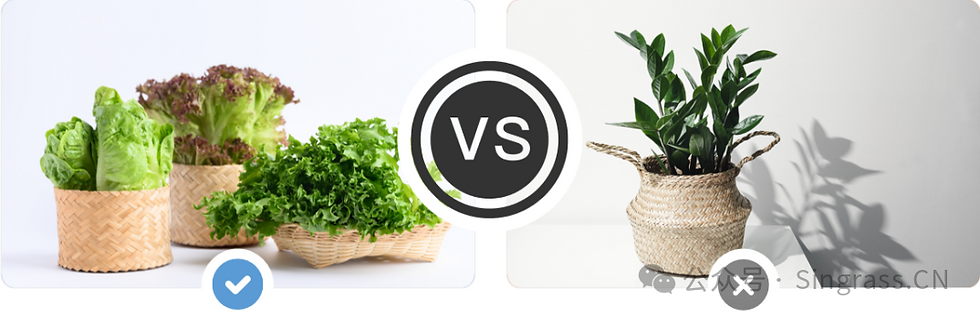
Plants only require around 400 ppm of CO₂ for photosynthesis. To achieve measurable air purification, 1,000 potted pothos plants would be needed for a 100-square-meter two-bedroom apartment. Furthermore, non-edible ornamental plants contain toxic substances such as calcium oxalate needles, alkaloids, cardiac glycosides, cyanogenic glycosides, saponins, toxic proteins and furanocoumarins, which are one of the triggers of Building-Related Illness (BRI).In contrast, leafy vegetables require 800–1500 ppm of CO₂ for photosynthesis, reducing indoor CO₂ concentration by 30%–50% more than pothos under the same leaf area. For an office space of 10,000 square feet (approx. 1,000 ㎡), only 12 units of SINGRASS® ISES™ arranged in a distributed layout are needed.

The dynamic growth of leafy vegetables creates a natural ecological landscape that effectively relieves eye strain and mental burnout for office workers. The fresh, pollution-free vegetables produced can be used for corporate culture building and employee interaction, delivering triple benefits of environmental improvement, cost reduction and efficiency gains, and carbon target fulfillment — addressing the widespread industry pain point that enterprises lack tangible carriers for ESG assessment.
SINGRASS × Campus Property: Ecological Teaching Aids That Boost Learning Efficiency
Classrooms and libraries are crowded with students, and excessive CO₂ directly impairs learning efficiency. Traditional potted plants are prone to breeding small insects and allergenic pollen, posing campus safety risks. Additionally, primary and secondary schools lack practical venues for labor education, and green campus construction lacks concrete implementation measures.

The hydroponic mode of SINGRASS® ISES™ is safe and harmless, continuously improving campus air quality. It also serves as a hands-on teaching aid in classrooms, creating a mini ecological farm on campus. Students can observe the full growth cycle from sowing, seedling raising to transplanting and harvesting. This not only implements national policies on labor education and science and innovation cultivation, but also fulfills green campus construction indicators with tangible green scenarios.


Comments